
Why Does a War in the Middle East Affect your SIP?
gauri srivastava
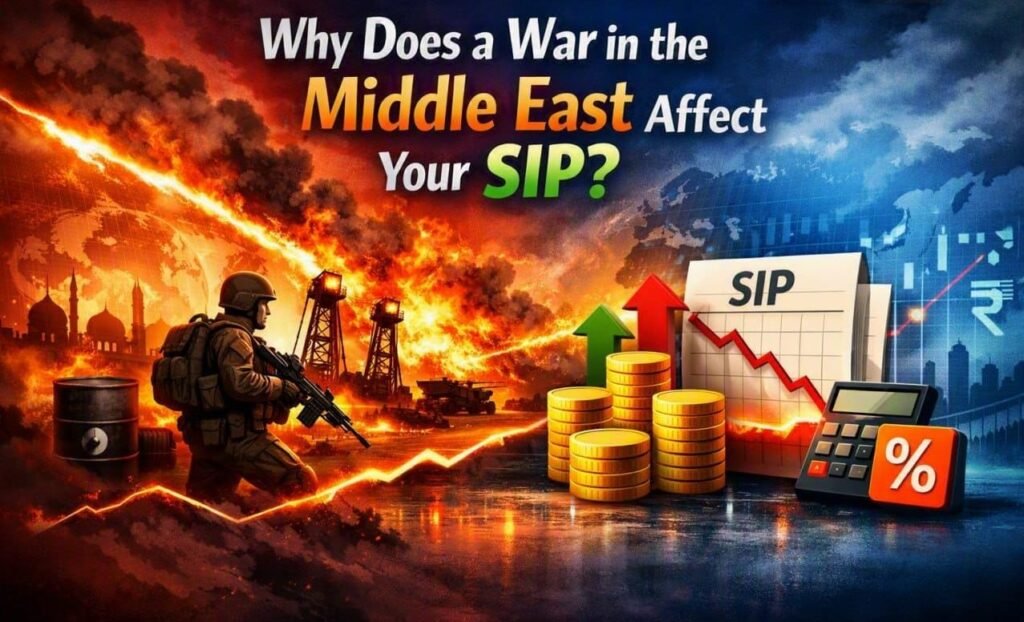
When war or major geopolitical conflict erupts in the Middle East, the effects can be felt far beyond the region. The uncertainty can affect global oil prices, inflation, currencies, interest rates and stock markets.
For Indian mutual fund investors, the question is: Why does a war affect your SIP?
The short answer is that your SIP is investing in mutual funds, and a lot of mutual funds invest in companies that are impacted by the economy and markets at large. Markets can be volatile in times of increased global uncertainty.
The link has been starkly illustrated in recent tensions in the Middle East. Higher crude oil prices raised concerns about inflation and India’s import bill, sending Indian shares lower on Sept. 2, 2026.
How Does a War Affect your SIP?
SIPs (Systematic Investment Plans) are a way to invest a fixed amount in a mutual fund at scheduled intervals. SIPs are intended to assist investors to invest regularly rather than attempting to time the market.
However, the value of the mutual fund can still go up or down because the underlying investments are subject to market conditions.
Here are the major ways war impacts your SIP-
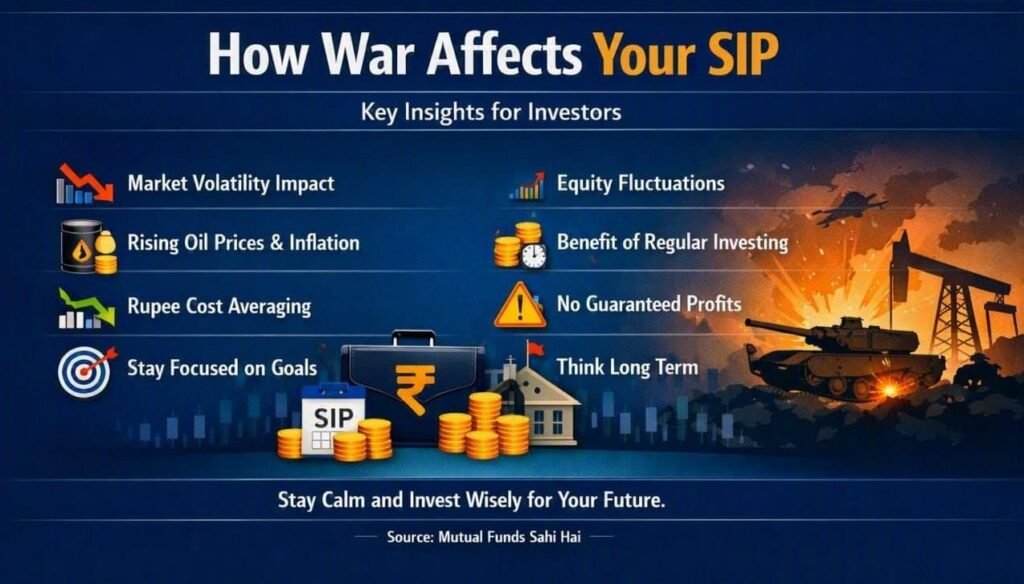
1. Rising Crude Oil Prices
One of the biggest is crude oil.
The Middle East has a very important role in global energy markets. When conflicts threaten oil production or routes for transporting oil, crude oil prices can rise.
Higher crude prices can be more expensive for:
- Airlines
- Carriers
- Manufacturing Companies
- Pharmaceutical Companies
- Logistical Companies
For an oil importing country like India, expensive crude can result in a higher import bill and inflationary pressure. Recent market movements have reinforced this relationship between Middle East tensions, higher oil prices and Indian equities.
2. Stock Market Volatility
Markets generally don’t like uncertainty. During geopolitical conflicts, investors may pull back, selling riskier assets. This may cause stock indices to fall in the short term.
For instance, Indian benchmark indices fell on September 2, 2026, as investors responded to higher crude prices and escalating tensions in the Middle East. This can lead to short-term volatility and affect equity mutual funds, and thus the value reflected in your SIP portfolio.
But there is one important difference:
A fall in the market is not a failure of your long term SIP investment strategy.
Which SIPs Can Be Affected?
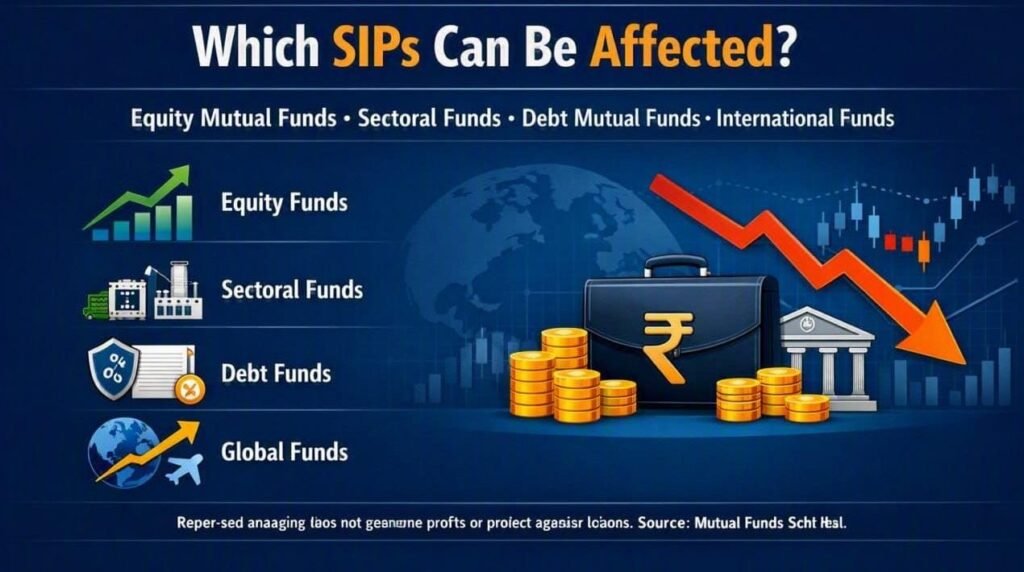
The impact isn’t identical across all mutual funds.
Equity Mutual Funds
Since the companies which underlie equity funds react to economic and geopolitical events, these funds can suffer considerable short-term volatility.
Sectoral Funds
The way funds in sectors such as banking, energy, infrastructure or chemicals react will depend on the effect of the conflict upon those industries.
Debt Mutual Funds
Debt funds may also be indirectly influenced when inflation, expectations regarding interest rates, and bond yields change.
Global Funds
Funds that invest outside of India may also be influenced by changes in global markets and fluctuations in currency exchange rates.
Frequently Asked Questions (FAQs)
1. How does a war affect your sip?
A war can affect your SIP indirectly through stock-market volatility, higher crude oil prices, inflation, interest-rate expectations and changes in investor sentiment.
2. Should I stop my SIP during a war?
There is no one-size-fits-all solution; it might not be appropriate to stop investing in an SIP just due to short-term market volatility. Instead, one should take into account your financial objectives, investment horizon and level of risk tolerance should be considered
3. Can SIPs benefit when markets fall?
When the net asset value is low, a fixed SIP results in the purchase of more units of a mutual fund; this is referred to as rupee-cost averaging. It’s important to note that it does not guarantee a profit or protect against losses.